Without a guaranteed, long-term supply of reactive minerals and sustainable biomass, even the most advanced carbon removal platforms face supply bottlenecks, volatile production costs, and idle processing infrastructure.
At Stack Carbon, securing scalable, high-purity inputs is not an afterthought—it is a core operational strategy. By building strategic supply partnerships across Uganda and Madagascar, we have anchored the physical foundations needed to deliver verified, high-integrity carbon removals across East Africa and the Indian Ocean region.
1. The ERW Mineral Pipeline: High-Reactivity Silicates Without Greenfield Mining Delays
Enhanced Rock Weathering accelerates Earth's natural geological carbon cycle by applying finely ground silicate rocks—such as nepheline and mafic minerals—to warm, acidic tropical soils. Rainwater carrying dissolved CO2 reacts with these minerals, converting soil carbon into stable bicarbonate ions that remain locked away for over 1,000 years.
Executing ERW at scale requires continuous access to suitable silicate rocks without incurring exorbitant extraction costs or long-distance transport emissions.
Strategic Quarry Partnership with ALOM
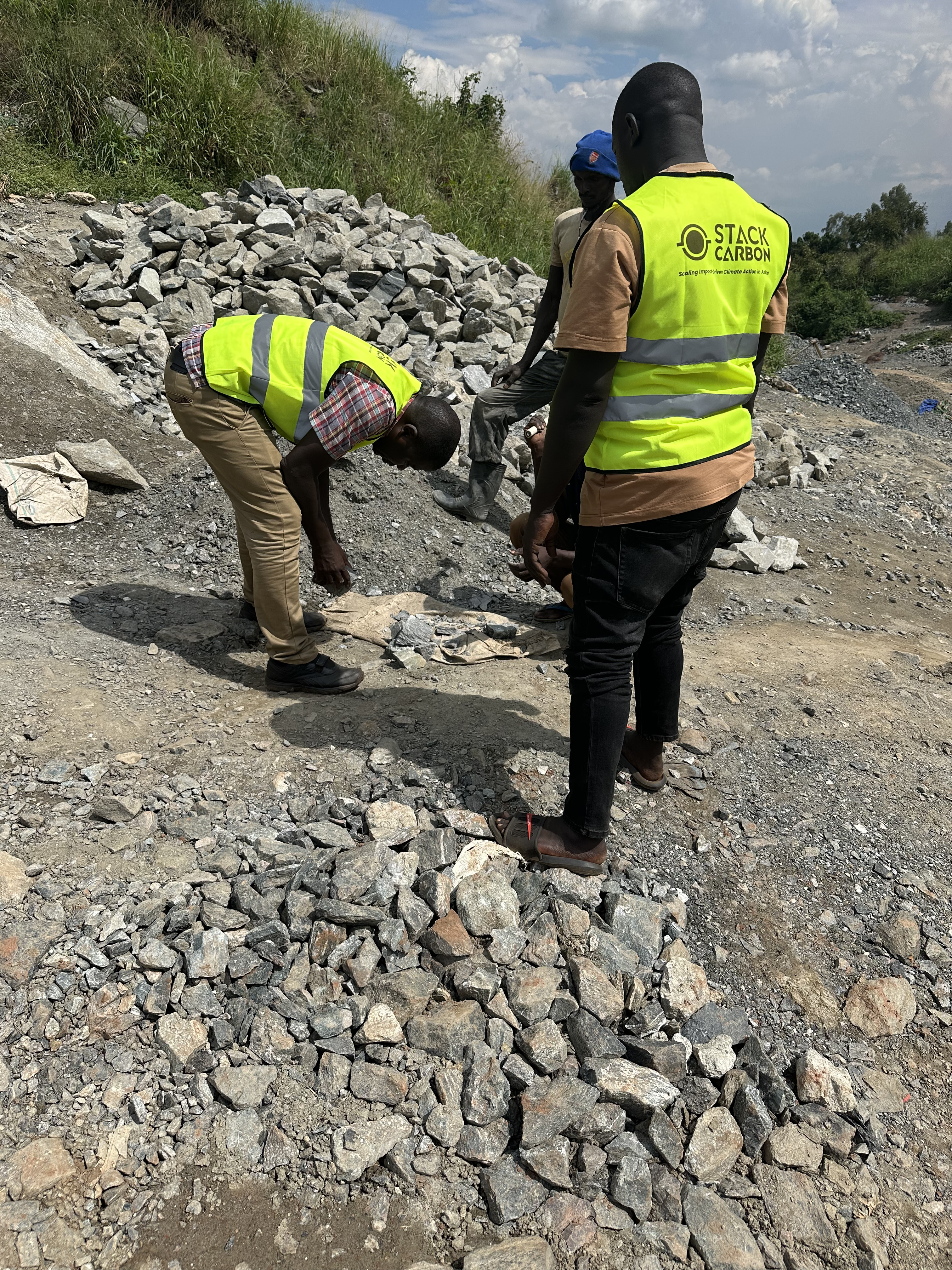
To anchor our mineral supply chain in Uganda, Stack Carbon partners directly with ALOM Mining & Geohydro Services. Rather than establishing new greenfield mines, which would cause local land disruption, our operations draw from ALOM’s active, fully operational quarry network.
- Immediate Volume & Low Extraction Overhead: Tapping into existing, active quarries bypasses greenfield development friction, drastically shortening lead times and ensuring immediate mineral availability.
- Geochemical Rigor: Every deposit undergoes rigorous testing to confirm high dissolution kinetics, rich concentrations of calcium and magnesium, and zero heavy-metal contamination.
- Low-Carbon Supply Chains: Sourcing locally near agricultural application zones minimizes transport emissions, ensuring a high net-carbon efficiency ratio for every tonne of silicate rock spread.
2. The Biochar Biomass Pipeline: Non-Food Agricultural Residues Across Uganda and Madagascar
While ERW addresses multi-millennial permanence, Biochar Systems provide rapid carbon lock-up, immediate credit availability, and vital soil moisture retention. The primary operational bottleneck for biochar is securing agricultural waste streams that do not compete with food production, local energy needs, or livestock feed.
Stack Carbon addresses this by tapping into two distinct, high-volume industrial waste streams across two regional hubs:
| Regional Hub | Primary Biomass Stream | Sourcing & Supply Characteristics |
|---|---|---|
| Uganda | Sugarcane Bagasse | Sourced directly from major industrial sugar processors; dense, high-thermal biomass ideal for high-temperature gasification. |
| Madagascar | Rice Husks | Sourced directly from commercial rice milling hubs; rich in natural biogenic silica with low alternative economic value. |
Circular Energy Synergies
In addition to producing recalcitrant biochar for soil application, high-temperature biomass gasification captures energy-rich thermal syngas. Through structured energy-offtake agreements, we convert this excess thermal power into dispatchable energy for flexible industrial and computing applications, creating a dual-revenue model that lowers net credit production costs.
3. Additionality, Circularity, and Environmental Safeguards
To meet the rigorous standards of international carbon registries, feedstock procurement must adhere to strict environmental criteria:
- True Waste Utilization: We strictly utilize agricultural residues that would otherwise decompose rapidly, emit methane, or be burned openly in uncontrolled fires.
- Zero Deforestation or Land Competition: Sourcing relies entirely on existing, established agricultural supply chains, guaranteeing zero land conversion, forest clearing, or competition with food crops.
- Agronomic Regeneration: Biochar and silicate minerals are returned directly to local farmlands, neutralizing tropical soil acidity, releasing essential micronutrients (like silica, calcium, and magnesium), and restoring degraded soil organic carbon.
4. Comprehensive Supply Risk Matrix & Developer Mitigations
As corporate procurement leads perform due diligence on land-based CDR developers, scrutiny is rapidly shifting from theoretical models to physical supply chain readiness. Below is a detailed breakdown of the primary feedstock risks in land-based CDR and how Stack Carbon addresses them structurally:
| Supply Chain Risk Domain | Industry Vulnerability & Impact | Stack Carbon Mitigation Strategy | Operational Outcome |
|---|---|---|---|
| Raw Material Bottlenecks | Project halts due to lack of accessible minerals or biomass | Dual-pathway sourcing via ALOM’s active quarries & contracted industrial waste streams | Eliminates greenfield quarry lead times and secures multi-crop agricultural waste |
| Feedstock Quality & Contamination | Heavy-metal contamination or unsuitable mineral/carbon ratios invalidating MRV | Pre-screened mafic silicates and unadulterated bagasse/rice husk streams | Guarantees high dissolution kinetics, non-toxic, and verified credit issuance |
| Price Volatility & Cost Inefficiency | Fluctuating credit production costs driven by expensive raw material spot markets | Long-term, multi-year supply agreements with fixed operational cost structures | Provides long-term pricing stability and predictable credit delivery for buyers |
| Seasonal Sourcing Gaps | Harvesting cycles causing operational downtime during off-peak months | Multi-regional, multi-crop footprint spanning Uganda and Madagascar | Ensures continuous year-round processing and gasification operations |
| Logistical & Transport Emissions | High embodied carbon from long-distance feedstock transport eroding net CDR efficiency | Distributed regional hub-and-spoke processing situated near farmland application sites | Maximizes net carbon accounting per tonne delivered to agricultural soils |
| Delivery & Performance Risk | Delayed credit issuance or under-delivery due to unexpected supply failure | Dual-country, dual-pathway portfolio flexibility across ERW and Biochar | Offers contract resilience, hedging risk across geographies and technologies |
By anchoring ERW operations with ALOM’s active quarry network and securing industrial biomass streams across Uganda and Madagascar, Stack Carbon provides buyers with total execution certainty, demonstrating that our carbon removal platform is backed by real, accessible physical assets on the ground.
Building Sustainable Climate Infrastructure
Durable carbon removal cannot scale on theoretical models alone, it requires physical supply chains built on ground-level partnerships, robust logistics, and verified environmental integrity.
By securing high-reactivity silicates alongside industrial agricultural residues, Stack Carbon continues to build the physical infrastructure required to drive climate action and rural soil regeneration across the Global South.
The partnership combines Stack Carbon's carbon removal deployment platform with ALOM's extensive geological expertise, active quarry network, and mineral processing infrastructure across the country. Together, the two organizations are establishing an end-to-end mineral supply chain designed to scale permanent carbon removal across East Africa.
Why Stack Carbon Chose ALOM
Executing Enhanced Rock Weathering with scientific rigor requires far more than sourcing raw rock. It demands precise mineral selection, verified geochemical safety, low-carbon transport logistics, and responsible local operational stewardship.
ALOM emerged as the ideal strategic partner because its operational footprint and geological expertise provide the physical foundation required to build a reliable and scalable mineral supply chain.
1. Multi-Quarry Footprint & Industrial Mineral Reserves
ALOM operates and manages a network of quarry operations and industrial mineral assets across Uganda. Sourcing directly from ALOM's established quarrying footprint provides Stack Carbon with greater visibility into feedstock availability and supply-chain execution.
- Guaranteed Mineral Access: Reliable supply lines of high-purity silicate rocks, including basalt, nepheline and other mafic minerals rich in the cations needed for rapid dissolution in tropical soils.
- Low Extraction Overhead: Leveraging active, operational quarries rather than developing greenfield extraction sites significantly reduces capital expenditure and supply-chain lead times.
2. Deep Geological Expertise & Geochemical Rigor
With over a decade of experience in geological mapping, geochemical sampling, core drilling, and mineral exploration across Uganda, ALOM's team of geologists and mining engineers brings the technical depth required to support rigorous feedstock qualification.
Every silicate deposit designated for ERW undergoes rigorous geochemical screening to confirm suitability for weathering in warm, acidic tropical soils, evaluate concentrations of calcium and magnesium, and identify potential heavy-metal contamination.
ALOM's technical oversight supports Stack Carbon's objective of ensuring that mineral feedstocks meet strict environmental safety and registry requirements, including applicable requirements under standards such as the Rainbow Standard.
3. Regional Logistics & Community-First Operations
Beyond geology, ALOM brings experience in local stakeholder engagement, environmental compliance, and regional logistics management across Ugandan districts.
Sourcing and processing rock locally can help minimize transport emissions, supporting stronger net-carbon efficiency while generating local economic value around the mineral supply chain.
Building permanent carbon removal requires infrastructure on the ground — from verified mineral resources and processing capacity to logistics and responsible local operations.
Accelerating Permanent Carbon Removal in Tropical Soils
Enhanced Rock Weathering accelerates the Earth's natural geological carbon cycle. When finely ground silicate rock is applied to warm, acidic agricultural soils, atmospheric CO2 dissolved in rainwater reacts with the minerals.
This geochemical reaction converts dissolved carbon into stable bicarbonate ions, which can drain through watersheds toward ocean basins, contributing to long-duration carbon storage within the natural carbon cycle.
The combination of Uganda's tropical agricultural landscapes and locally available silicate resources creates an opportunity to develop an ERW deployment model that connects carbon removal with agricultural regeneration.
Creating Value Beyond Carbon Removal
In addition to permanent atmospheric carbon removal, applying suitable silicate minerals can deliver immediate agronomic value to smallholder farmers.
- Neutralizing Soil Acidity: Restoring pH balance in degraded tropical soils.
- Replenishing Vital Minerals: Releasing essential plant nutrients such as silica, calcium and magnesium.
- Enhancing Crop Resilience: Supporting soil structure and moisture retention during dry spells.
What Supply Security Means for Carbon Buyers Evaluating Projects
As institutional carbon buyers evaluate land-based carbon removal projects, scrutiny is shifting from theoretical models toward physical supply-chain security, feedstock availability, and execution readiness.
When corporate procurement teams perform due diligence on ERW developers, the primary operational risks can include raw material bottlenecks, unverified mineral chemistry, and logistics delays.
By anchoring its mineral supply chain with a proven in-country mining and geological partner, Stack Carbon offers buyers greater clarity on feedstock origin, chemical characterization, and physical delivery capability.
- Established access to active quarry infrastructure.
- Geological and geochemical expertise for mineral screening.
- Local processing and logistics capabilities.
- In-country operational and stakeholder relationships.
The partnership demonstrates that Stack Carbon's ERW deployment is backed by accessible mineral resources and active industrial infrastructure on the ground — an important consideration as the carbon removal market moves toward larger-scale procurement.
Building Sustainable Climate Infrastructure
"Scaling permanent carbon removal is fundamentally a physical supply chain challenge," said Bashir Dan, CEO of Stack Carbon. "Partnering with ALOM provides us with both the geological foundation and the physical quarry infrastructure needed to scale Enhanced Rock Weathering across Uganda with uncompromised scientific integrity and operational reliability."
The collaboration marks another major milestone as Stack Carbon continues expanding its dual-pathway carbon removal footprint, combining Enhanced Rock Weathering and Biochar Systems to drive climate action and rural agricultural regeneration across the Global South.
From Geological Resources to Climate Action
The Stack Carbon and ALOM partnership represents an important step toward building the physical infrastructure required for high-integrity carbon removal in Africa.
By bringing together mineral resources, geological expertise, local operations and carbon removal deployment capabilities, the collaboration creates a foundation for scaling ERW while maintaining a strong focus on scientific rigor, supply-chain transparency and local value creation.
As Stack Carbon continues developing projects across the Global South, partnerships like this will play an important role in connecting the physical realities of carbon removal with the growing demand for durable, high-integrity climate solutions.
As the largest ERW offtake agreement signed in Africa to date, the partnership represents a major commercial milestone for Stack Carbon and signals growing institutional confidence in Africa's emerging high-integrity carbon removal market.
Building Durable Carbon Removal in Africa
Stack Carbon develops scalable, high-integrity carbon removal solutions tailored to African agricultural landscapes. Our mission centers on deploying technologies that deliver verified atmospheric carbon removal while creating tangible, localized value for host communities.
Our Enhanced Rock Weathering pathway accelerates natural geological carbon sequestration. By applying finely crushed silicate rock to active agricultural soils, atmospheric CO2 reacts with dissolving minerals to permanently trap carbon in bicarbonate form.
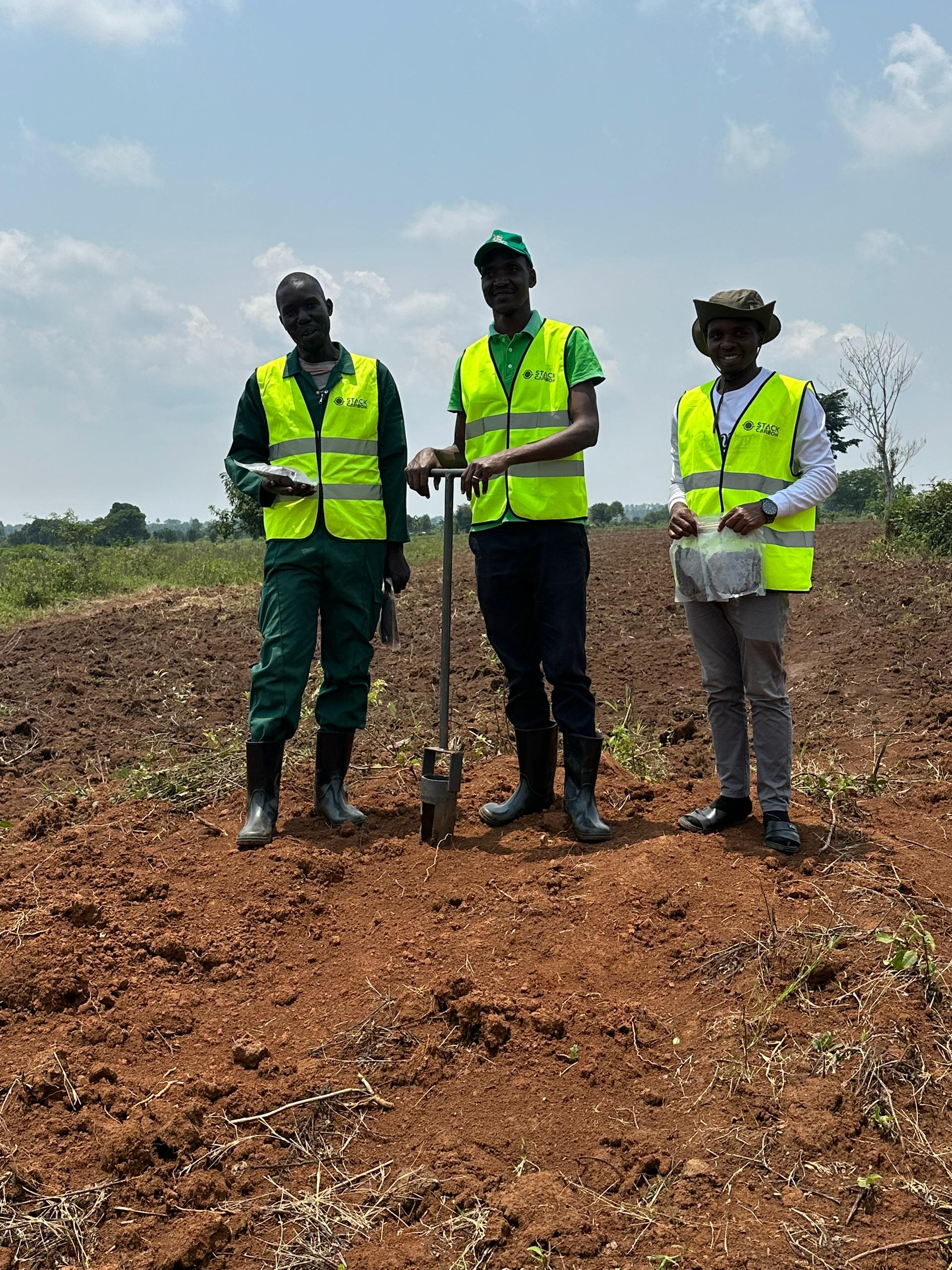
Beyond carbon removal, soil application offers critical co-benefits for smallholder farmers:
- Soil Health Regeneration: Neutralizes soil acidity and replenishes vital micronutrients.
- Agricultural Yield Support: Enhances soil structure and nutrient retention
- Climate Resilience: Improves crop vitality in regions increasingly vulnerable to climate volatility.
The project is registered under the Rainbow Standard’s ERW Methodology, establishing a transparent and rigorous framework for monitoring, reporting, and verification (MRV).
A Major Milestone for African CDR Landscape
Long-term offtake agreements provide the foundation for scaling the carbon removal ecosystem. They grant developers the revenue certainty needed to expand operations while guaranteeing buyers access to high-quality, durable credits.
For Wild Assets, this transaction marks its largest global ERW commitment to date and its initial asset entry into Africa.
"This is our largest ERW offtake to date, and our first asset in Africa. Our trust in Stack Carbon originates from the demonstrated conduct of the team—in the field, in the lab, and throughout the commercial process—as well as the thoughtful fit of the project to the region’s geography."
— Matan Rudis, Partner and Co-founder at Wild Assets
Central to Stack Carbon’s operational philosophy is the alignment of global climate demand with local economic development. Carbon removal projects in emerging economies must deliver direct benefits to the landscapes and communities hosting them.
By integrating rock application into existing farming workflows, Stack Carbon ensures that the financial and environmental value generated by the net-zero transition directly supports rural livelihoods and soil restoration.
Scaling Future Ambitions
The Wild Assets agreement provides momentum toward a much broader target:
- 1,000,000+ Tonnes: Total durable CDR targeted for delivery by 2035.
- 250,000 Hectares: Agricultural land targeted for regeneration across Uganda and Madagascar.
- Local Infrastructure: Long-term investment in regional sampling labs, MRV logistics, and supply chain capacity.
Africa possesses the geological assets, agricultural scale, and entrepreneurial capability to lead the next generation of durable carbon removal. Stack Carbon is building that infrastructure from the ground up.
While scientific rigor remains non-negotiable, a critical consensus is emerging among institutional carbon buyers and climate leaders: a carbon removal project cannot achieve operational permanence if it fails to build social permanence.
Long before any rock dust or biochar reaches a field, scaling carbon removal starts with a simpler, deeper commitment: building community trust. In land-based carbon dioxide removal (CDR) pathways—such as Enhanced Rock Weathering (ERW) and Biochar—the local leaders, residents, and smallholder farmers who steward the land are not passive beneficiaries. They are the core operational partners who transform scientific ambition into meaningful climate action.
Answering the Hard Questions at Stack Carbon
At Stack Carbon, we place a heavy emphasis on scientific rigor—deploying finely ground silicate rock (such as nepheline and mafic minerals) alongside biochar systems across tropical agricultural landscapes in East Africa. But we also know that even the strongest technical design fails if it operates in a vacuum.
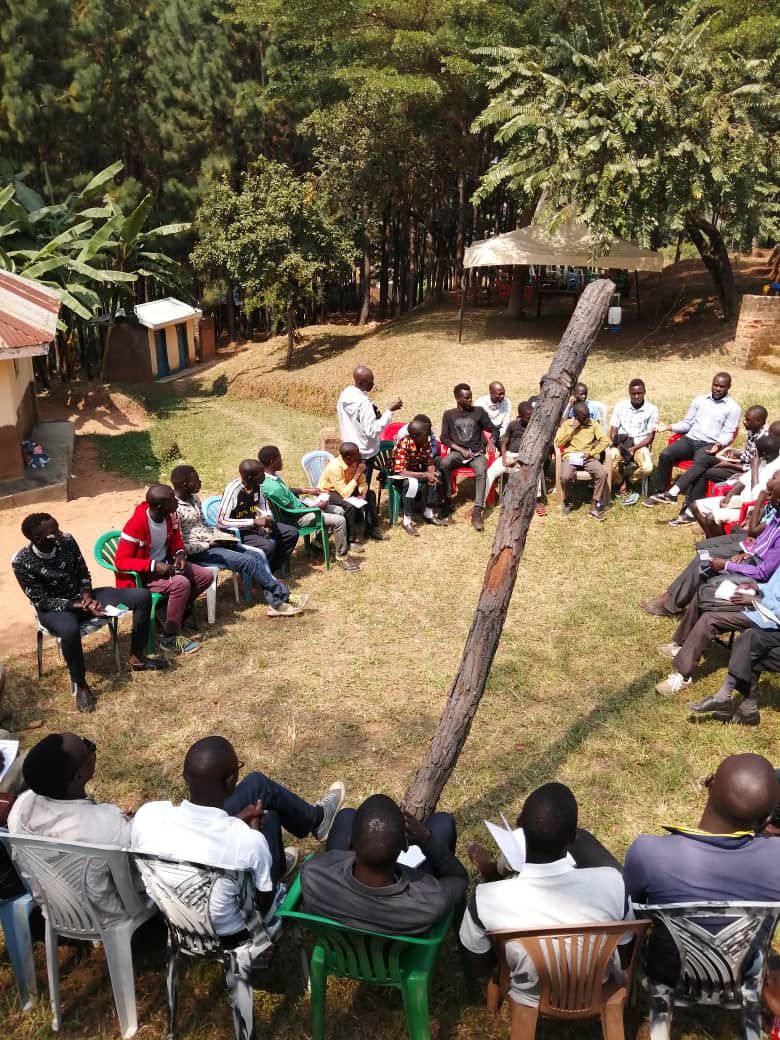
When we enter a new deployment zone, we don’t ask communities to sign onto a finished blueprint. We invite them to interrogate it. Across community halls and field sites, we sit down with local leaders, farmers, and regional agronomists to tackle the hard questions head-on:
"Will this rock dust or biochar affect our crop yields or harm our soil over time?"
How Stack Carbon addresses it: We walk through the geochemistry transparently. Finely crushed silicate rock and biochar aren't synthetic chemicals— they are natural mineral and carbon amendments that neutralize tropical soil acidity, release vital micronutrients (like silica, calcium, and magnesium), and dramatically improve soil water retention. We share localized field data and set up demonstration plots so farmers can evaluate the agronomic performance on their own land before committing.
"Who owns the carbon rights, and how does value actually flow back to us?"
How Stack Carbon addresses it: We establish clear, transparent legal and economic frameworks before any field work begins. Landowners and farmers retain full control of their land and crops, while benefiting from free soil-conditioning inputs, localized soil testing, and direct economic opportunities created across our supply chain operations.
"Will participating restrict what crops I can plant or how I manage my land in the future?"
How Stack Carbon addresses it: Not at all. Stack Carbon operates on a non-intrusive, agronomy-first model. Farmers maintain 100% decision-making authority over their crop choices, land rotations, and management practices. Our soil amendments— whether finely ground silicate rock or biochar—are integrated into existing farming calendars without requiring farmers to alter their traditional agricultural routines or sign away control over their land.
These are just a few of the many candid questions raised during our community town halls. From discussing feedstock safety and road traffic during spreading seasons to clarifying how soil data is stored and shared, we welcome every concern. Open, unfiltered dialogue before deployment isn't a hurdle for us—it is the foundation of mutual trust and long-term operational success.
Social Permanence Protects Carbon Permanence
For corporate buyers seeking 100-to-1,000+ year durability under frameworks like the SBTi Corporate Net-Zero Standard V2.0, project continuity is paramount. While geochemical mechanisms guarantee the chemical permanence of locked CO2, operational stability ensures that field operations survive over decades.
Geochemical Permanence
- Silicate rock dissolution
- Stable bicarbonate formation
- Biochar recalcitrant carbon
Social Permanence
- Local community trust
- Cooperative stewardship
- Multi-generational alignment
Even the strongest technical protocol cannot survive without local partnership. When farmers observe tangible, multi-year benefits, such as balanced soil pH, restored soil organic carbon, and enhanced drought resilience, they become the primary stewards of the deployment. Social permanence protects physical permanence.
Community Partnership Drives Ground-Truth MRV
High-integrity MRV requires dense, continuous data collection: baseline soil core sampling, trace-element monitoring, pH tracking, and application logging across distributed farm plots.
Attempting to execute field-level MRV purely through external, fly-in technical teams is inefficient and difficult to scale. By grounding our operations in community partnership, Stack Carbon embeds technical capacity directly on the ground:
- Local Agronomic Training: Training community members as field technicians to conduct standardized soil sampling, GPS mapping, and moisture monitoring.
- Ground-Truth Feedback: Utilizing local farming knowledge to optimize feedstock transport, local grinding operations, and spreading techniques tailored to micro-climates.
- Data Transparency: Returning soil test results directly to farmers, empowering them with actionable agronomic data to optimize their own crop management.
This creates a resilient operational network where scientific verification is carried out by the people who know the soil best.
What Corporate Buyers Should Look For in Project Due Diligence
For corporate procurement teams navigating land-based carbon dioxide removal (CDR) under frameworks like the SBTi Corporate Net-Zero Standard V2.0, evaluating social integrity is just as critical as validating geochemical modeling. Projects that overlook community alignment carry severe delivery, operational, and reputational risks.
When conducting due diligence on project developers, corporate buyers should scrutinize three core pillars of community-centered design:
Authentic Consultation vs. Post-Hoc Notification
The Benchmark: Does the developer engage local communities before physical deployment begins?
What to Look For: Evidence of structured community engagement and open consultation frameworks where landowners, local leaders, and smallholder farmers are invited to interrogate the science, clarify land autonomy, and shape field scheduling.
Tangible Agronomic & Economic Alignment
The Benchmark: Does the carbon removal pathway actively enhance the host landscape?
What to Look For: Clear evidence that the technology delivers direct, measurable benefits to local agricultural systems, such as soil acidity neutralization, restored soil organic carbon, micronutrient replenishment, and improved moisture retention.
Embedded Local Infrastructure & Supply Chains
The Benchmark: Is long-term operational capital staying within the host economy?
What to Look For: Investment in physical regional infrastructure, such as local laboratories, regional feedstock crushing and grinding partnerships, biochar processing setups, and localized transport networks. Building in-country operational capacity ensures multi-decade stability and local economic integration.
One Community at a Time
High-integrity carbon removal is not an abstract financial transaction, it is a physical process rooted in real soils, real farms, and real human relationships.
As Stack Carbon prepares for our next phases of deployment across East Africa, our work remains guided by a core conviction: lasting climate impact is built together. By pairing rigorous science with deep community trust, we ensure that every tonne of carbon removed represents both verified atmospheric permanence and verified rural regeneration—one community at a time.
For over 11,000 companies globally, the Science Based Targets initiative (SBTi) serves as the definitive rulebook for setting, validating, and achieving corporate climate targets.
With the publication of the SBTi Corporate Net-Zero Standard V2.0, two fundamental questions that previously hung over the carbon management market have received much clearer direction: Does permanence matter, and when do companies need to buy?
The update delivers actionable answers to both—reshaping corporate procurement strategies and highlighting how a diverse portfolio of carbon management solutions will be essential to reaching global climate goals.
1. The "Like-for-Like" Principle: Aligning Removal Pathways with Emissions Profiles
Corporate climate action relies on a spectrum of vital solutions, from forestry and soil organic carbon practices to durable engineered and mineral removals. Standard V2.0 clarifies how different mitigation tools align with long-term climate targets through the "like-for-like" principle:
When a company reaches its net-zero target year, its residual long-lived greenhouse gas emissions, primarily fossil CO2, must be neutralized with permanent removals of matching durability.
This approach ensures that every carbon removal pathway plays to its distinct strength: short-to-medium term nature-based solutions deliver immediate ecosystem restoration and biodiversity protection, while high-permanence pathways like Enhanced Rock Weathering (ERW), which locks atmospheric carbon into stable bicarbonate form for over 1,000 years, provide long-term neutralization for persistent fossil emissions.
2. A Concrete Timeline: Ongoing Emissions Responsibility (OER)
Rather than waiting until final target net-zero dates (e.g., 2040 or 2050) to build removal portfolios, SBTi V2.0 introduces the Ongoing Emissions Responsibility (OER) framework. OER provides a structured roadmap for companies to invest in carbon removal pathways alongside ongoing internal decarbonization.
The framework outlines three voluntary engagement tiers today:
| OER Tier | Scope Coverage Requirement | Financial / Removal Target |
|---|---|---|
| Engaged | Mitigate at least 1% of ongoing Scope 1–3 emissions | Initial commitment entry point |
| Advanced | Cover 10% of full Scope 1, 2, and 3 footprint | Mandatory minimum spend of $20/tonne |
| Leadership | Cover 100% of full Scope 1–3 footprint | Dedicated budget target of $80/tonne |
The 2035 Compliance Checkpoint
Starting in 2035, Category A companies (large enterprises and mid-sized firms in high-income economies) face mandatory compliance. They must neutralize at least 1% of their long-lived Scope 1–3 emissions with permanent carbon removals, scaling linearly to 100% by their net-zero target year.
3. Clarifying Corresponding Adjustments
In earlier drafts of the V2.0 standard, proposed rules would have barred corporates from claiming credits if host countries counted those removals toward their own Nationally Determined Contributions (NDCs).
The finalized V2.0 settled this debate: credits remain eligible for corporate claims regardless of whether a Corresponding Adjustment (CA) under Article 6 has been applied.
Companies must transparently disclose whether CAs are attached to their credits. While credits backed by Corresponding Adjustments carry the highest integrity tier, unadjusted credits remain valid for corporate net-zero and OER claims. This decision opens a clear runway for high-integrity carbon projects across Africa and the Global South to supply global corporate buyers across various credit categories.
4. Committing Today: Multi-Pathway Flexibility for Corporate Buyers
Waiting until 2035 to secure carbon removal volume exposes corporate buyers to severe market bottlenecks, price volatility, and unhedged compliance risk. Because project infrastructure—from feedstock supply chains to field-level measurement, reporting, and verification (MRV)—takes years to scale, forward-thinking organizations are committing now through early-stage investments, pre-purchases, and structured multi-year offtakes.
Under the SBTi V2.0 framework, corporate procurement teams need options that balance immediate budget constraints, near-term recognition, and long-term permanence criteria. Stack Carbon meets this demand by offering two complementary, high-integrity carbon removal pathways from a single operational platform across East Africa:
ENHANCED ROCK WEATHERING (ERW)
- Durability: 1,000+ Years
- Optimal For: Long-lived fossil GHG neutralization & maximum permanence
- Agronomic Co-benefits: Soil pH balancing & silica replenishment
BIOCHAR
- Durability: Hundreds of Years
- Optimal For: Rapid scaling & near-term OER budget optimization
- Agronomic Co-benefits: Carbon retention & soil water-holding
By offering both pathways from a single operational platform across Africa, Stack Carbon provides corporate procurement teams with total contract flexibility. Sustainability leaders can structure tailored portfolios, combining ERW for maximum long-term permanence with Biochar for immediate deployment, matching their exact budget tiers, volume targets, and SBTi compliance timelines without being locked into a single technology.
Moving Toward a Balanced Carbon Market
SBTi’s Corporate Net-Zero Standard V2.0 reinforces that meeting global climate goals requires a portfolio approach, combining rapid internal emissions reductions, immediate nature-based conservation, and scalable durable removals.
By providing clear rules for long-term neutrality alongside actionable entry points today, the new standard gives corporate leaders the clarity needed to invest in high-integrity carbon removal pathways with confidence.

Stack Carbon Secures Multi-Year Enhanced Rock Weathering Offtake with Wild Assets
Read More →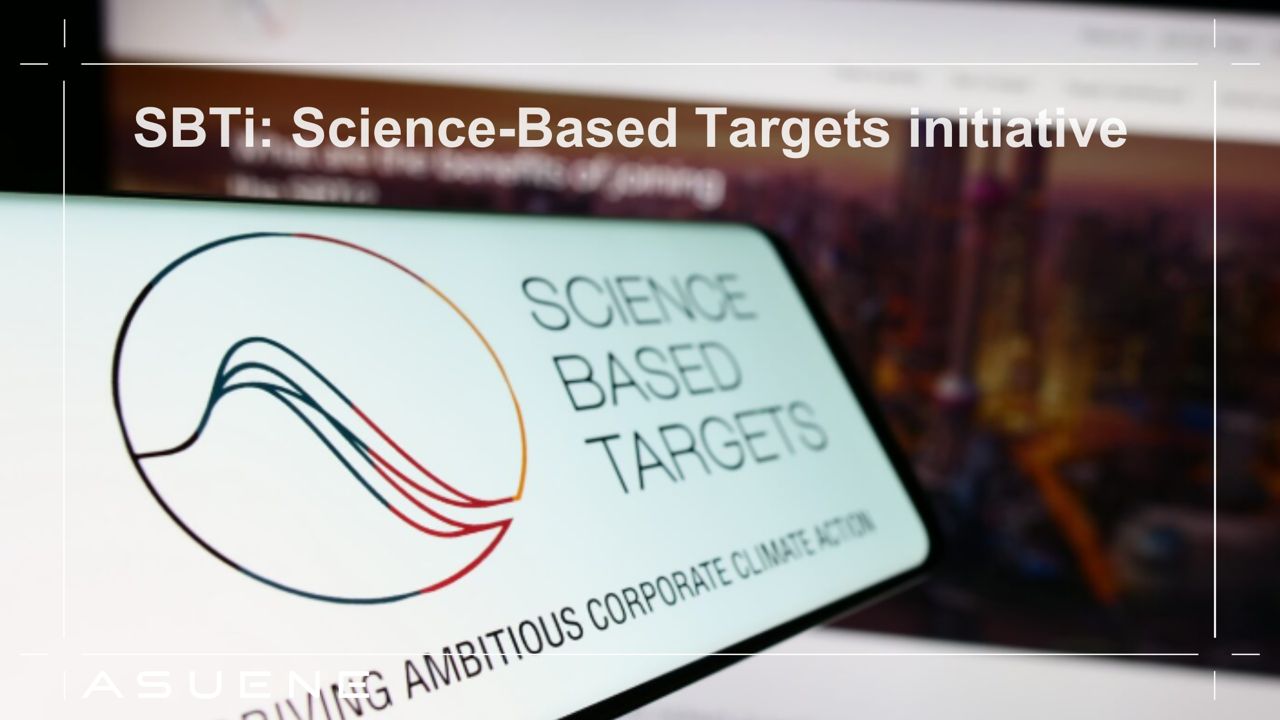
How SBTi’s Net-Zero Evolution Is Driving Corporate Demand for Carbon Removal
Read More →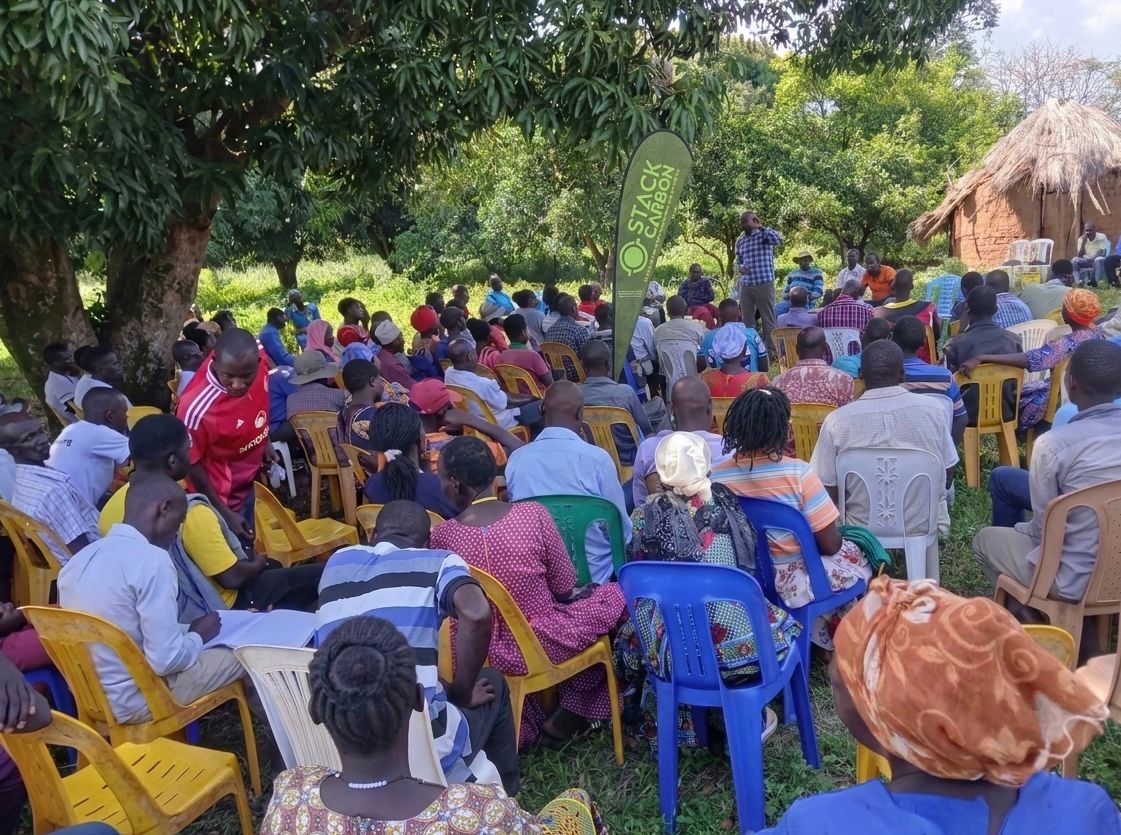
Why Community Co-Design Is the True Indicator of Carbon Removal Integrity
Read More →
Stack Carbon Partners with ALOM to Secure High-Reactivity Silicate Feedstocks
Read More →